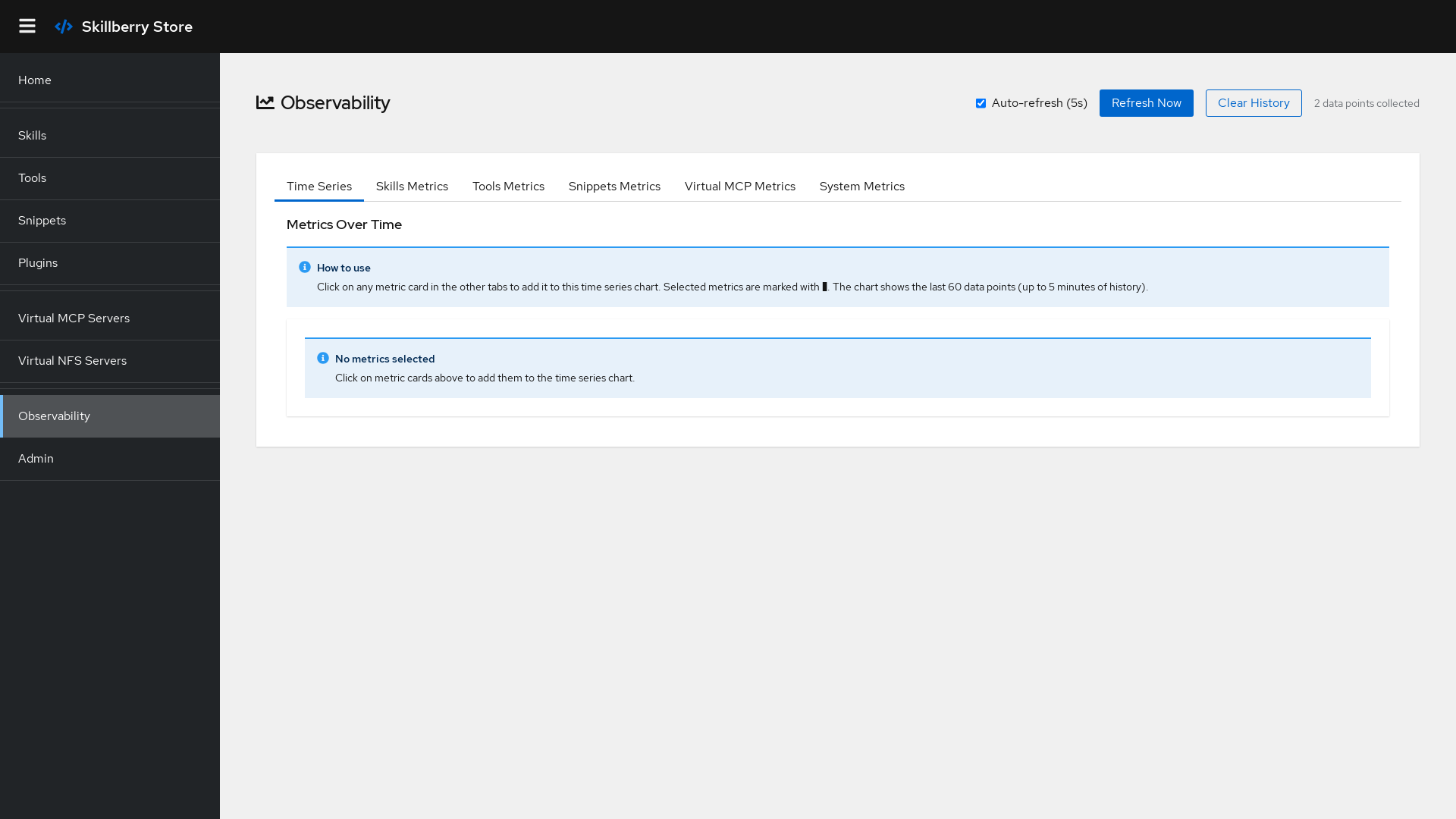
Semantic & classic search
Shortlist tools, skills, and snippets by meaning or by keyword. Every resource is embedded (faiss by default, 384 dimensions) so agents and humans find the right capability fast.
- Search across tools, skills, snippets, VMCP and vNFS servers
- Filter and label with namespaces for categorization
- Lifecycle controls for state and visibility
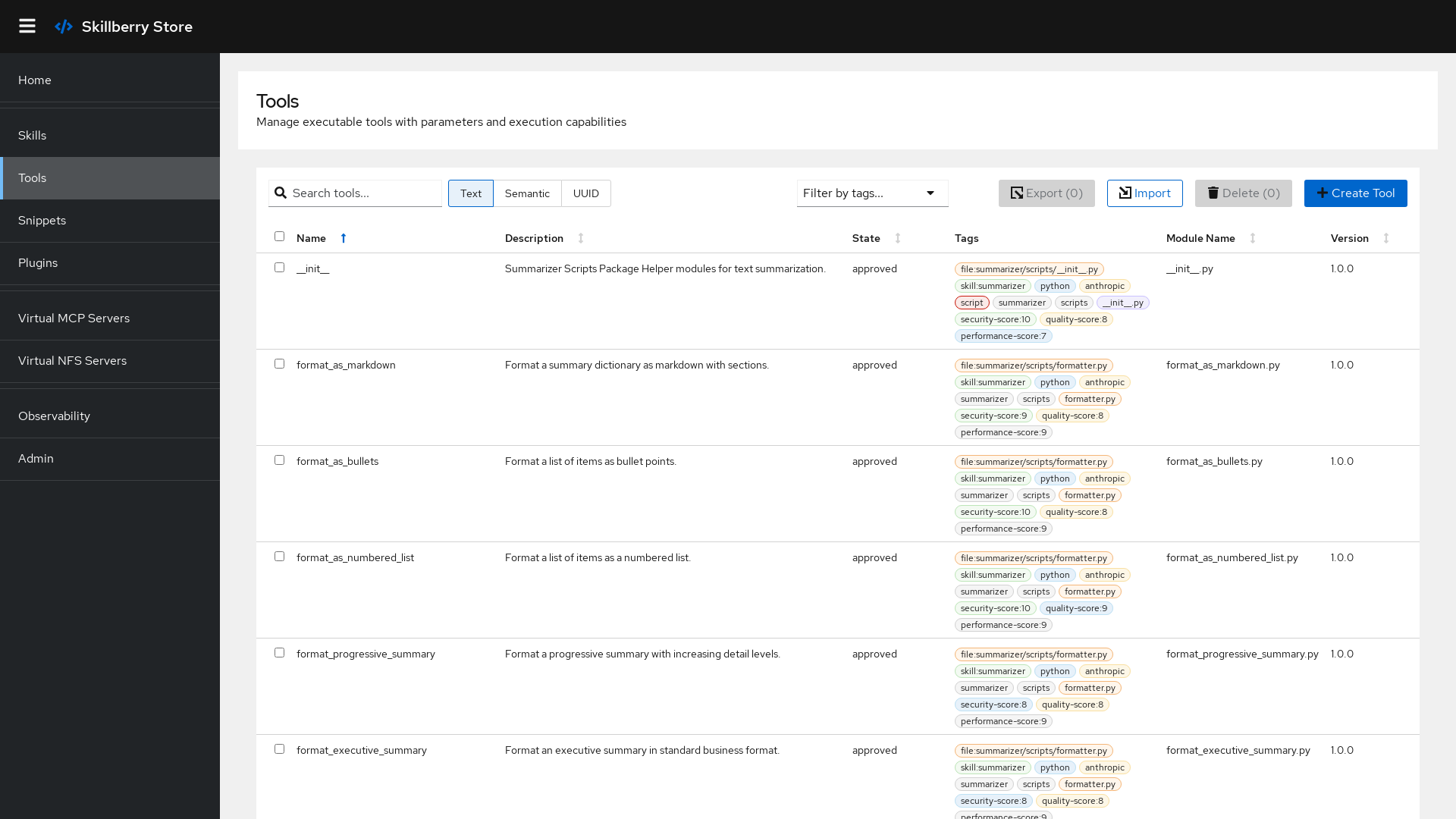
Sandboxed execution
Invoke tools with parameters inside a Docker (or Podman) sandbox, so agent-generated code never touches your host. Dependencies can be auto-detected, and execution is available from the UI, the REST API, the CLI, and over MCP.
- Isolated, parameterized tool execution
- Automatic tool dependency detection
- Optional local execution mode for development
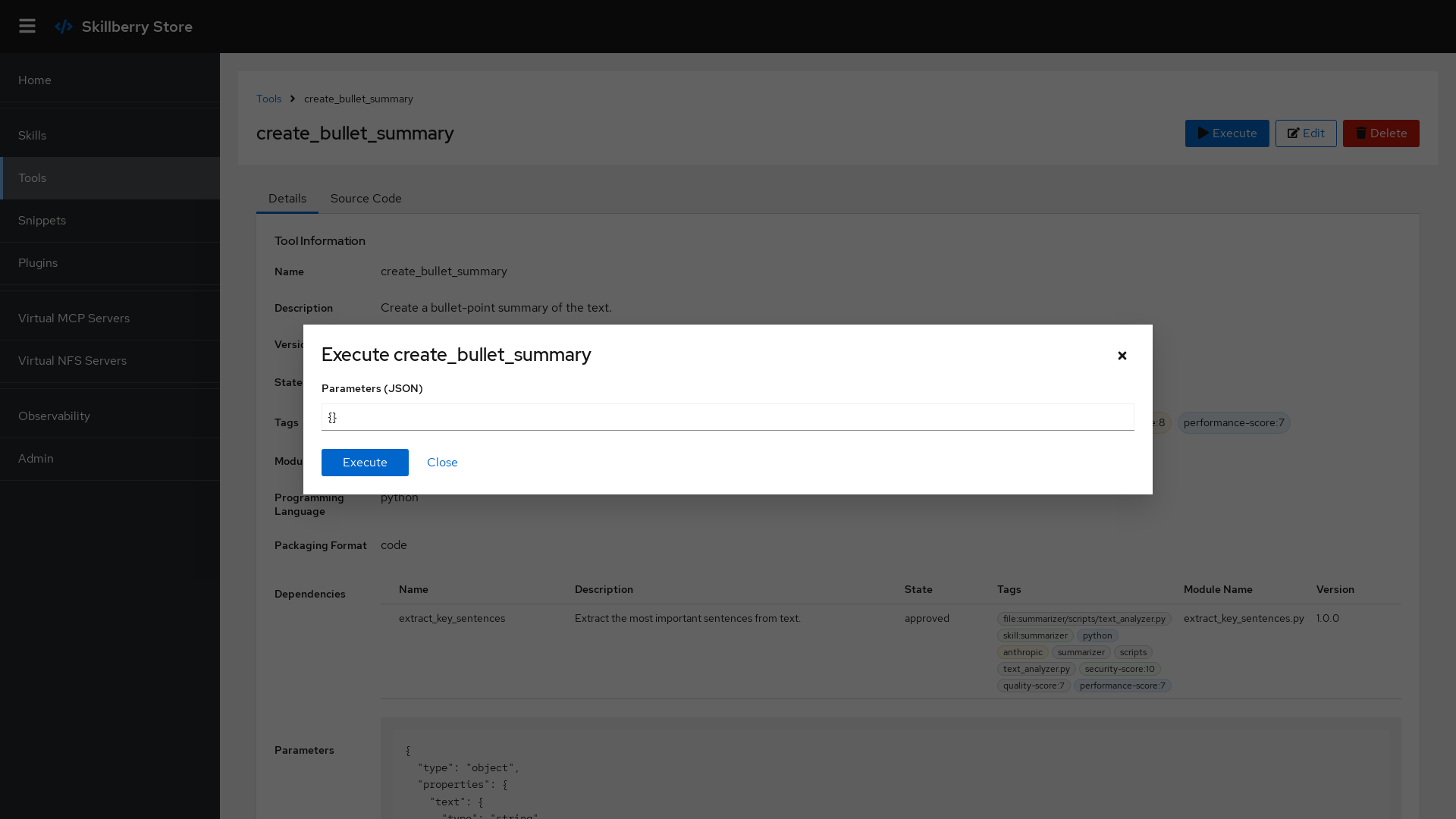
Virtual MCP servers (VMCP)
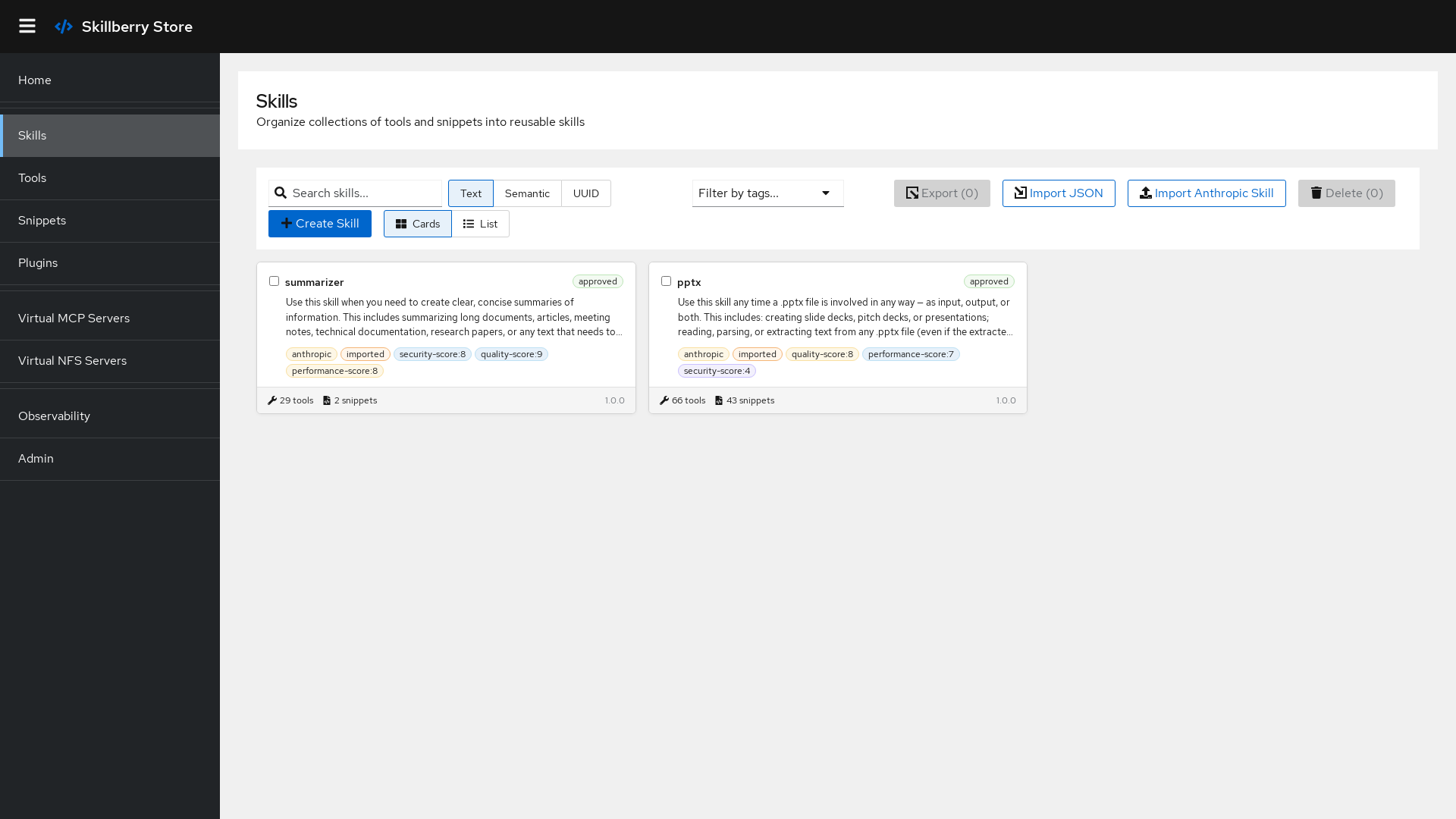
A VMCP server exposes a single skill's tools and snippets as a standalone MCP endpoint on its own port. Point Claude, Cursor, or any MCP client at it — or expose every REST operation as MCP tools through the control API at /control_sse.
- One skill → one standalone MCP endpoint
- MCP frontend: serve your tools to any agent framework
- MCP backend: consume and route tools from external MCP servers
Mountable vNFS filesystems
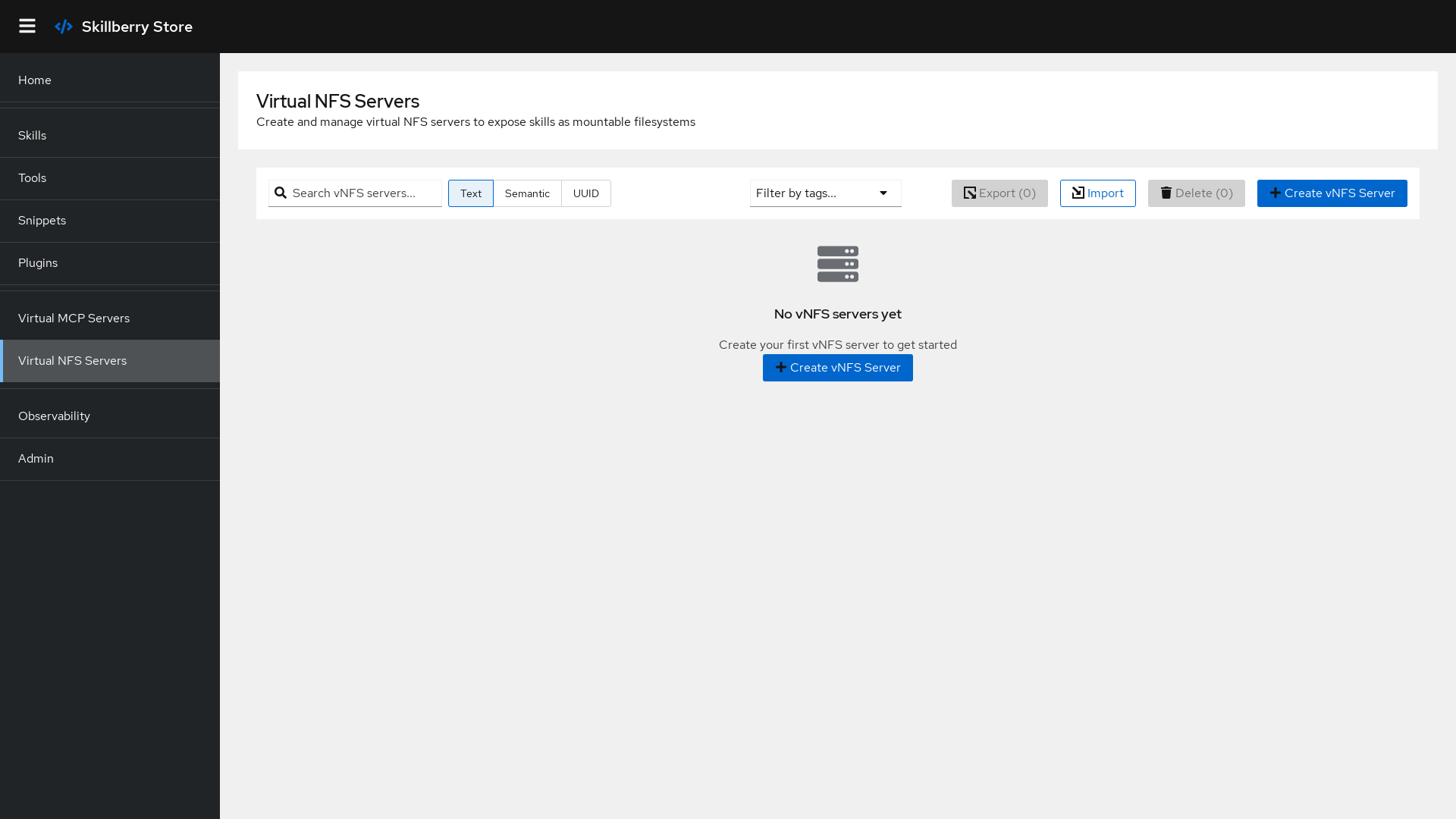
A vNFS server exposes a single skill as a read-only filesystem over WebDAV or NFSv3. Any tool that can mount a network drive — including Claude Code — reads skill files directly via mount or rclone, no REST API required.
- WebDAV (default) or NFSv3 protocols
- Mount with
rclone,davfs2, or native NFS - The UI shows pre-filled mount commands per server
One-command install into any agent
A skill in the store installs straight into Claude Code, Cursor, Codex and ~70 other agents with one copy-pasted command and nothing installed first — npx fetches the CLI, and the store serves the skill's bytes over the open /.well-known/agent-skills discovery convention.
npx skills add https://store.example.com/pub/pdf-forms -y -a claude-code- No
npm install, no git credentials, no login from the terminal - The store hands you the whole command — from each skill's page, or
sbs get-skill <name> --fields name,_npx_install - One skill per URL: on a secured store the URL carries a read-only token scoped to that skill alone
npx skills updatere-downloads only what changed- Off by default — a deliberate opt-in, since it serves skill content without a session
Observability & persistence
Understand how your tools are used and where your data lives. SBS emits Prometheus metrics and OpenTelemetry traces, and persists resources to the filesystem or to GitHub repositories via version-controlled hooks.
- Prometheus metrics (prefixed
SBS_) and Jaeger-compatible traces - Filesystem or GitHub-backed persistence
- Pluggable vector DB backends: faiss, Chroma, LanceDB